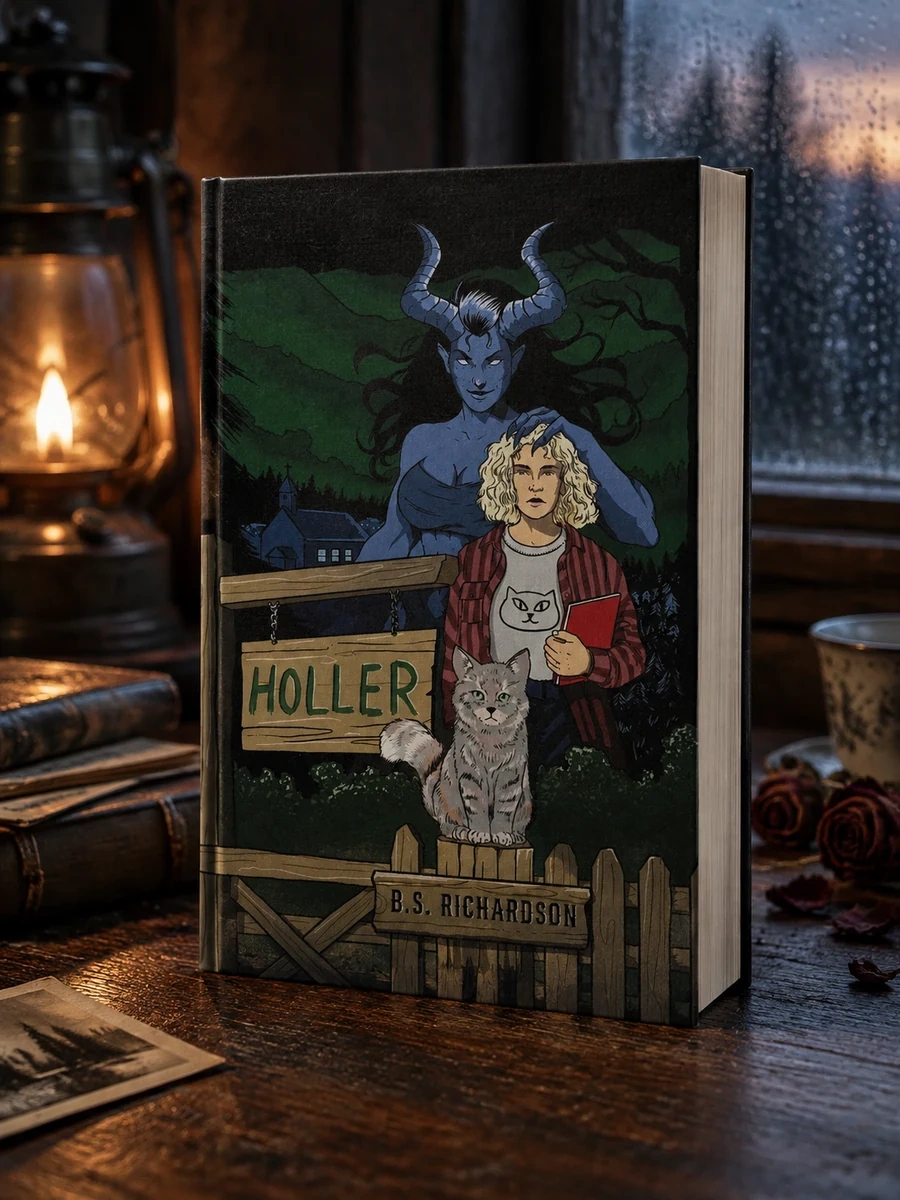
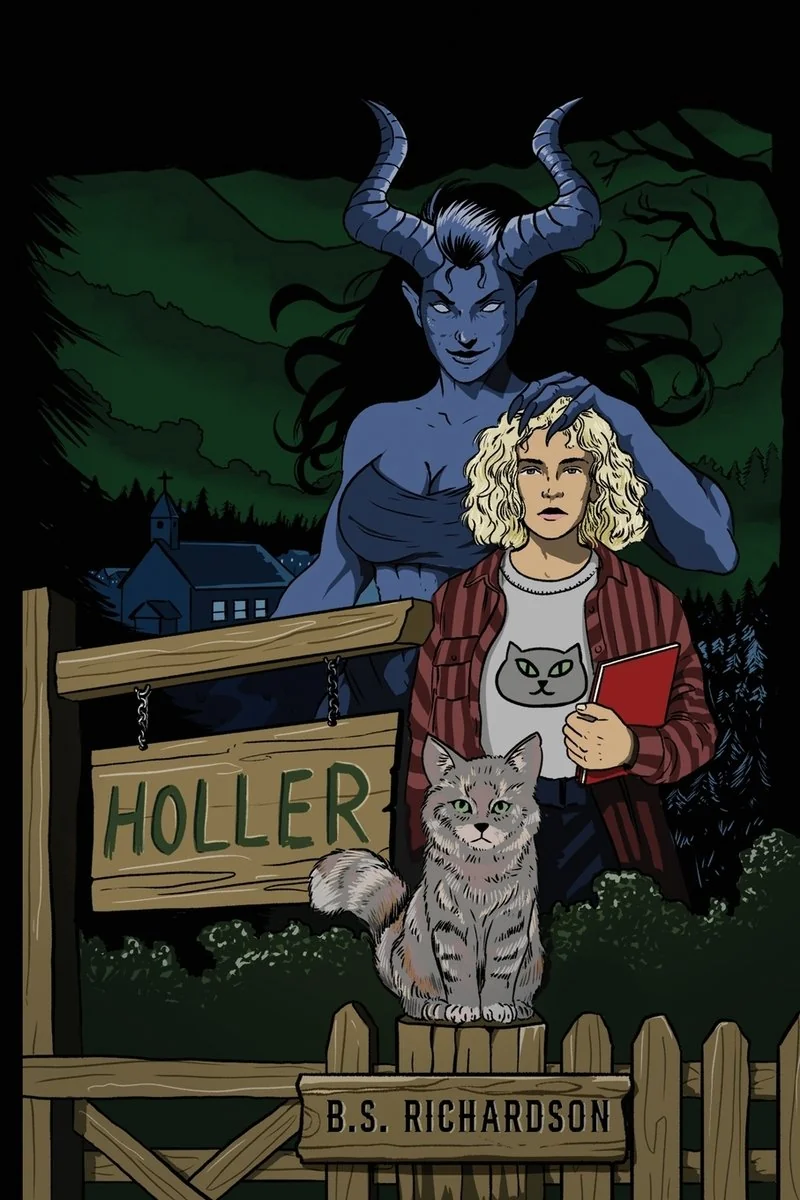
HOLLER An Appalachian Story
A gothic tale of witch heritage and church predation in Appalachia
Richardson constructs a narrative where folklore meets institutional danger. The protagonist’s journey reveals how hidden bloodlines interact with predatory religious structures. The text uses Appalachian settings to explore themes of identity and survival. It avoids generic horror tropes by grounding the supernatural in specific regional traditions. The story examines the cost of uncovering family secrets in tight-knit communities. Readers will find a focus on psychological tension rather than graphic violence. The narrative structure emphasizes discovery through local legends. It offers a critique of how institutions exploit vulnerability. The book stands as a study of fear within familiar landscapes.
The story is set in the hollers of Appalachia. It draws on regional supernatural traditions and local myths. The setting emphasizes rural isolation and hidden histories. The narrative reflects the cultural weight of family lineage in this specific geographic area.


📝 Description: HOLLER An Appalachian Story
💎 Our verdict on HOLLER An Appalachian Story
📖 Why choose it
Why this book is worth reading
Readers who appreciate atmospheric depth over rapid plot progression will find significant value in this narrative. It appeals to those interested in Southern Gothic fiction and folklore studies, offering a grounded exploration of how local legends manifest in contemporary fears. The book is ideal for fans of slow-burn horror who prioritize psychological tension and cultural specificity. Those seeking to understand the cost of uncovering family secrets within tight-knit communities will gain insight into themes of identity and survival. It suits individuals who prefer internal discovery over broad supernatural warfare, providing a critique of institutional predation through a unique regional lens rather than generic horror tropes.
⭐ Reader reviews
Reader rating
Brandy Sue Richardson delivers a compelling study of fear within familiar landscapes, grounding the supernatural in specific Appalachian traditions. The narrative effectively examines how hidden bloodlines interact with predatory religious structures, creating a sense of dread that feels both personal and systemic. Richardson avoids graphic violence, focusing instead on psychological tension and the erosion of safety within places of supposed protection. This approach rewards patient readers who value atmospheric horror and cultural nuance. While it may feel deliberate to those expecting fast-paced action or urban paranormal elements, the slow-burn structure builds a potent critique of community secrecy and institutional exploitation.
You might also like
See more →





Have a question about this item?
Ask about the edition, condition, delivery or anything else — we reply by email or phone, usually within a day.
