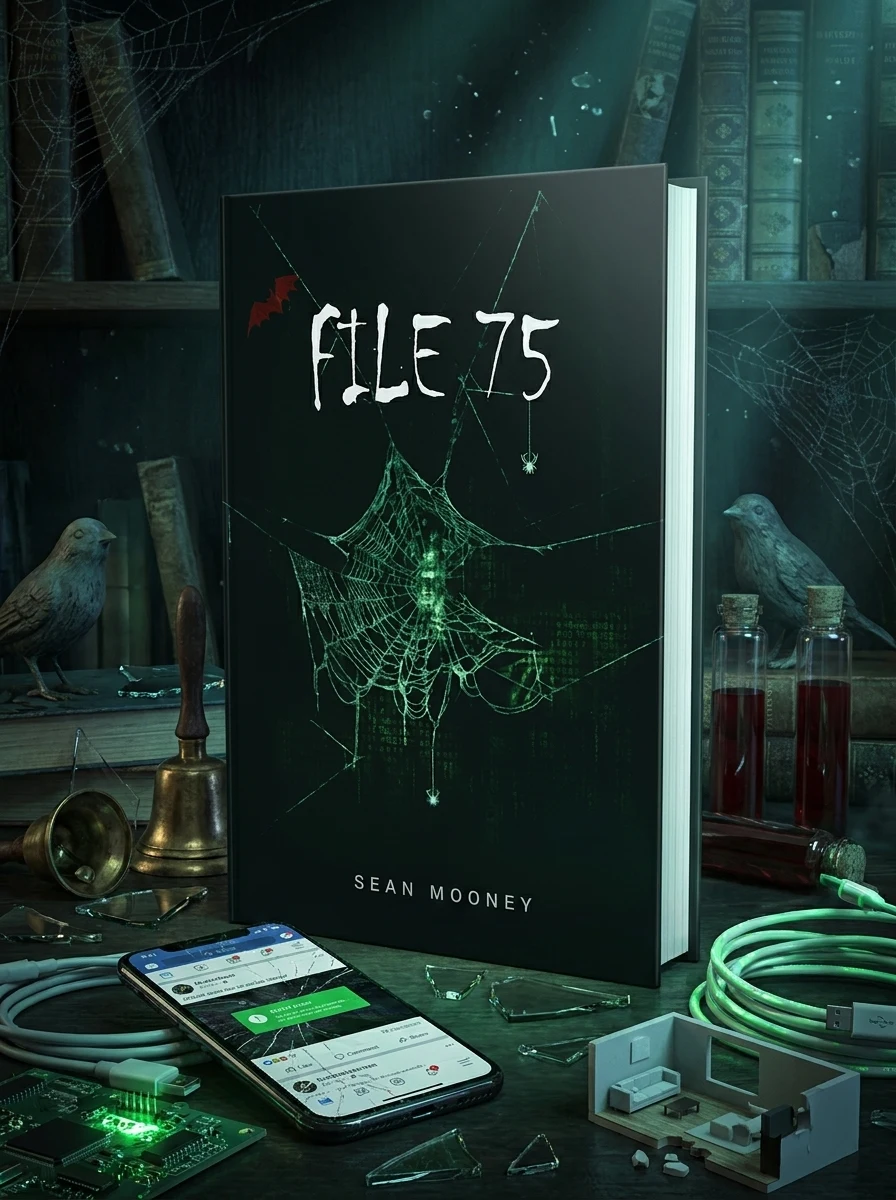
File 75
A horror novel about a digital virus linked to a haunted English house.
Zara Mathews lives a curated life in New York, defined by her career and social media image. Her world shifts after meeting Edward online, which triggers an invasion by a malicious presence. This force is revealed to be part of a deadly computer virus called File 75. The digital infection is not isolated but is connected to a haunted house in northern England. The plot explores how this ancient evil uses modern networks to spread. Zara becomes the latest target in a lineage of victims linked to this specific digital entity. The story examines the vulnerability of personal data and online identities when faced with supernatural forces. It treats the computer virus as a conduit for an old, malevolent spirit. The narrative focuses on the psychological impact of losing control over one's digital and physical environment.
The work sits within contemporary horror fiction, published in 2019 by Sean Mooney. It reflects modern anxieties about online safety and digital privacy. The setting bridges New York urban life with English rural folklore, combining two distinct cultural spheres of fear.


📝 Description: File 75
💎 Our verdict on File 75
📖 Why choose it
Why this book is worth reading
Readers who appreciate the intersection of technological fear and classic supernatural dread will find this narrative compelling. It offers a unique exploration of how ancient malevolence adapts to modern networks, providing a fresh take on the haunted house genre. Those interested in psychological horror that examines the vulnerability of personal data against paranormal forces will gain from its atmospheric tension. The book appeals to individuals seeking stories where digital anxiety amplifies traditional gothic elements, creating a sense of ubiquitous, inescapable dread.
⭐ Reader reviews
Reader rating
Sean Mooney effectively blends modern technological fears with older supernatural traditions, creating a distinct subgenre experience. The narrative succeeds in portraying the digital virus as a conduit for an old spirit, grounding the horror in Zara’s psychological unraveling. This approach resonates strongly with readers fascinated by viral internet culture and folklore. While it may not suit those preferring purely historical ghost stories, its focus on online identity vulnerability provides timely tension. The integration of prophecy omens with computer infection creates a cohesive, unsettling atmosphere that challenges the boundary between physical and digital haunting.
📖 Read on the blog
🏛 Books from this publisher Independently Published








You might also like
See more →



Have a question about this item?
Ask about the edition, condition, delivery or anything else — we reply by email or phone, usually within a day.
