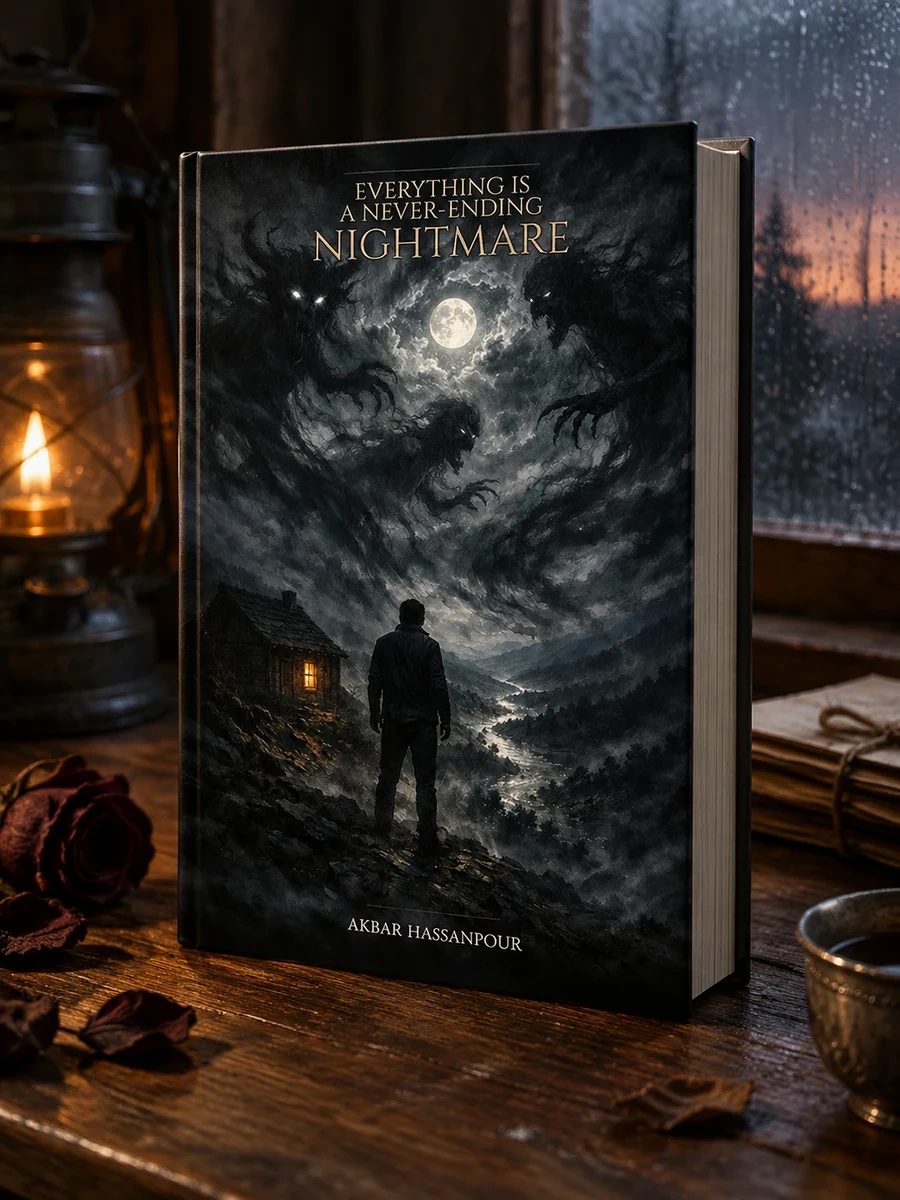
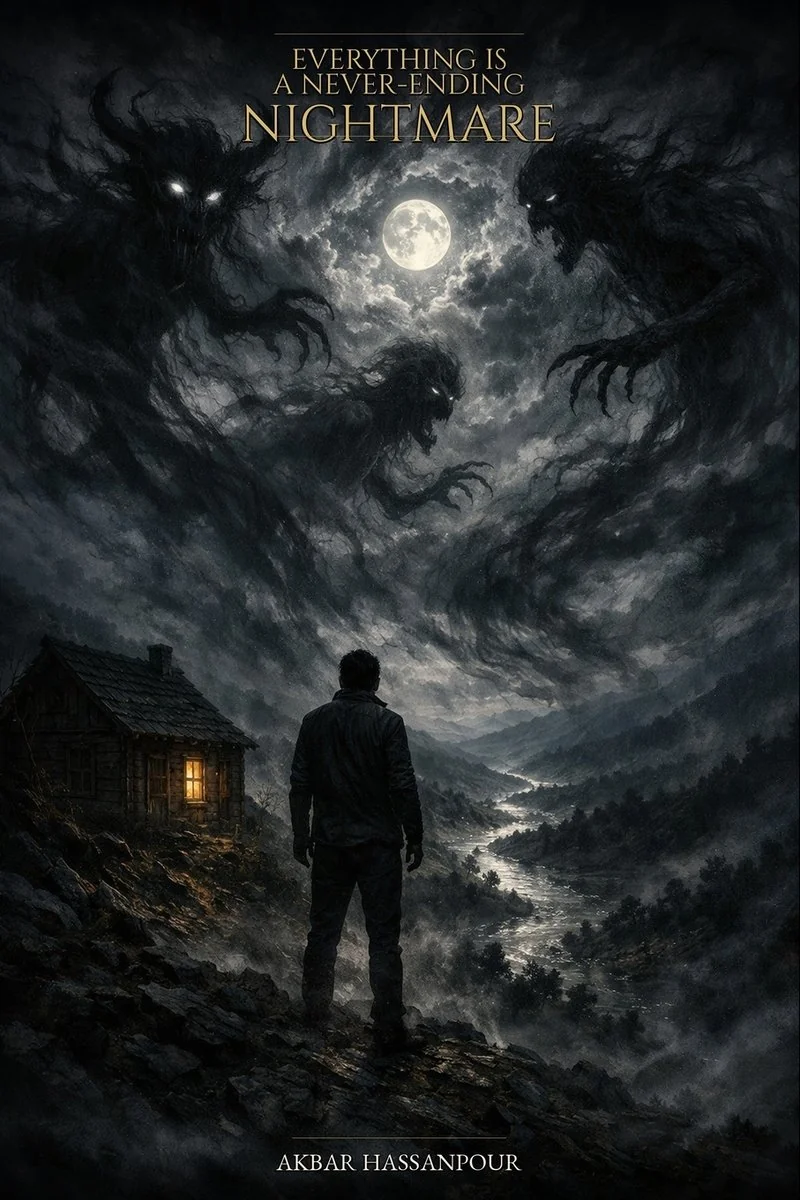
Everything Is a Never-ending Nightmare
A fractured three-chapter novel exploring existential dread and demonic haunting.
Hassanpour structures the narrative around three isolated figures trapped in their own psychological prisons. Each chapter shifts perspective to reveal different facets of a collapsing reality. The first section focuses on intellectual despair, while the second introduces surreal imagery through a hermit’s encounter. The final part grounds the story in physical coldness and mental stagnation. This progression moves from abstract philosophical doubt to concrete sensory deprivation. The author uses these distinct voices to examine how isolation distorts perception. The opium haze serves as a recurring motif that obscures memory and identity. Readers will find a consistent tone of dread rather than sudden shocks. The text prioritizes internal struggle over external action.
The work blends the introspective intensity of Sadegh Hedayat with echoes of Kafka and Camus. It sits within the tradition of dark literary fiction and existential philosophy. The narrative examines the shadowy edges of human consciousness rather than adhering to conventional genre boundaries.


📝 Description: Everything Is a Never-ending Nightmare
💎 Our verdict on Everything Is a Never-ending Nightmare
📖 Why choose it
Why this book is worth reading
This book is ideal for readers who prefer atmospheric dread over jump scares and intellectual depth over plot-driven action. It suits those interested in existential philosophy, the dissolution of reality, and the psychological effects of isolation. By examining how external pressures darken the soul and distort perception, Hassanpour offers a meditation on free will and betrayal. Readers seeking to explore the shadowy edges of human consciousness through surreal imagery and fragmented narratives will find this work rewarding. It is not for those who desire straightforward plots or uplifting resolutions, but rather for those willing to engage with a challenging, tone-consistent exploration of mental stagnation and demonic haunting.
⭐ Reader reviews
Reader rating
Hassanpour crafts a fractured narrative that prioritizes internal struggle over external action, creating a consistent tone of dread throughout. The progression from abstract philosophical doubt to concrete sensory deprivation effectively illustrates how isolation distorts perception. While the text lacks traditional horror thrills, its introspective intensity and surreal imagery provide a unique experience for fans of dark literary fiction. The work successfully meditates on isolation and the weight of forces beyond human control. It is best suited for readers comfortable with difficult, non-linear storytelling who appreciate the legacy of existentialist writers. Those seeking uplifting endings may struggle, but others will find profound value in its examination of a soul under pressure.
📖 Read on the blog
🏛 Books from this publisher Independently Published








You might also like
See more →



Have a question about this item?
Ask about the edition, condition, delivery or anything else — we reply by email or phone, usually within a day.
