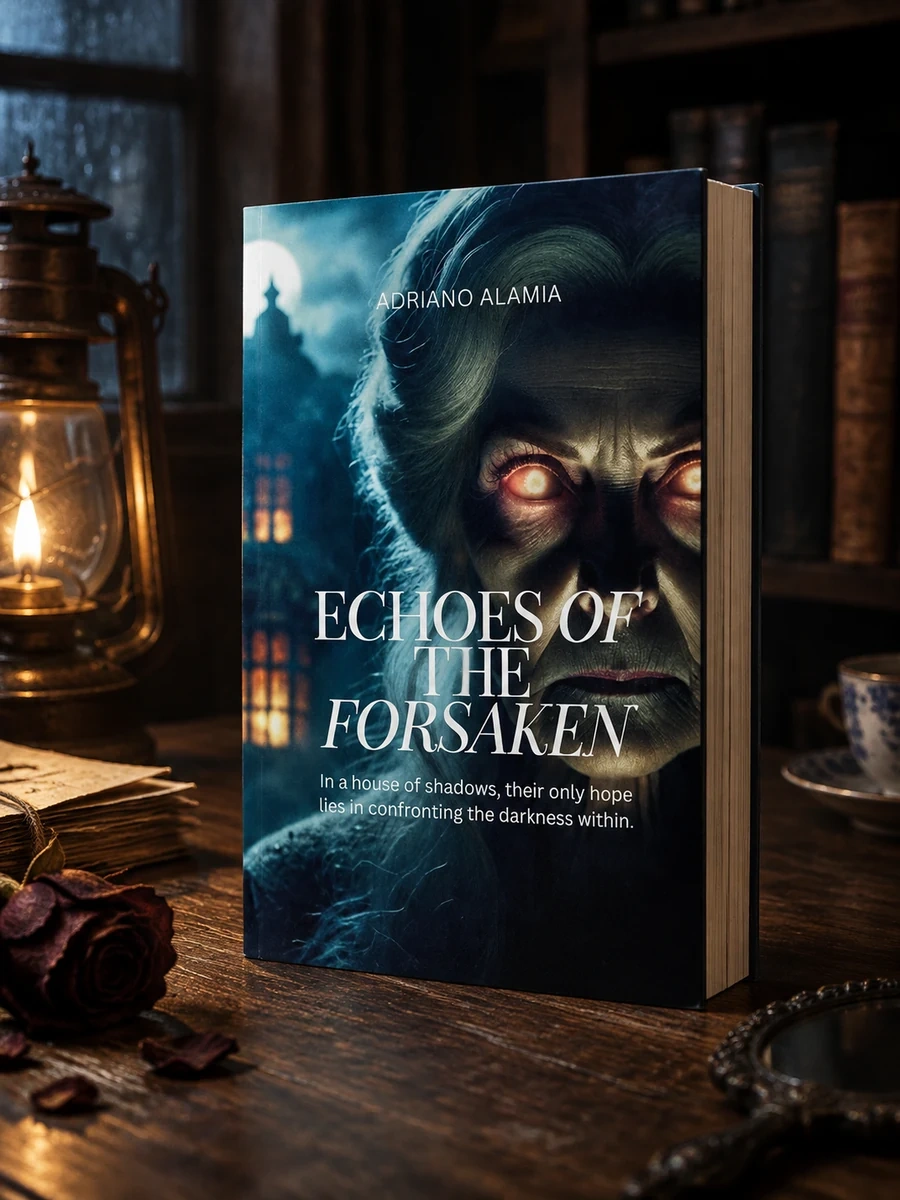
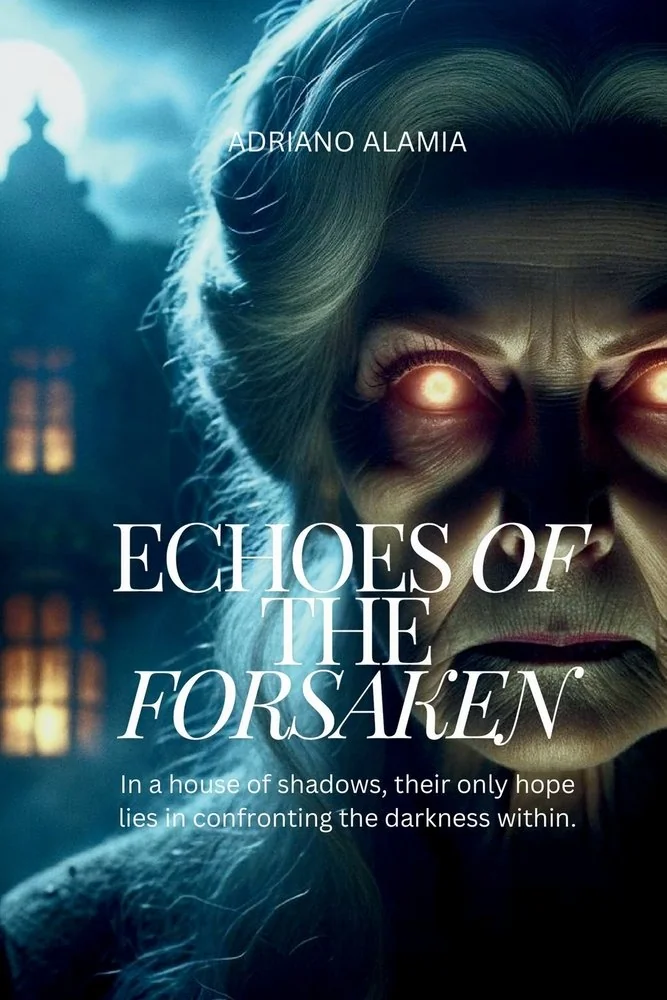
Echoes of the Forsaken
Three men trapped in a haunted mansion must confront their pasts to escape a witch's spell.
Lucas, Trey, and Mark initiate a heist at an old mansion, but the enigmatic owner Eleanora uses dark magic to trap them. The residence becomes a nightmarish labyrinth where they cannot leave until they face their deepest fears and past mistakes. Escape requires a dangerous ritual involving great sacrifice and an alliance with the witch who bound them. The story emphasizes the psychological toll of their confinement and the necessity of confronting personal history. Alamia focuses on the interplay between supernatural horror and character redemption. The narrative does not offer easy solutions, instead demanding that the protagonists reckon with their errors to break free from the shadows.
The work draws on traditions of gothic fiction and supernatural horror. It features a haunted mansion setting typical of classic ghost stories. The narrative incorporates elements of dark magic and witchcraft within a modern context. The story aligns with contemporary horror trends that blend psychological tension with supernatural threats.


📝 Description: Echoes of the Forsaken
💎 Our verdict on Echoes of the Forsaken
📖 Why choose it
Why this book is worth reading
Readers who appreciate horror that prioritizes psychological depth over cheap jumpscares will find this narrative rewarding. It is ideal for those interested in gothic traditions where the setting acts as a crucible for personal redemption. The book appeals to fans of character-driven horror, offering a tense exploration of how past mistakes haunt the present. Those willing to engage with themes of sacrifice and moral reckoning will enjoy the interplay between dark magic and human frailty. It is not suitable for those seeking lighthearted entertainment or pure action without emotional weight.
⭐ Reader reviews
Reader rating
Alamia successfully merges supernatural dread with intense psychological scrutiny, creating a claustrophobic atmosphere that feels both ancient and immediate. The mansion serves effectively as a malevolent labyrinth, forcing protagonists to confront their deepest fears rather than merely fighting external monsters. This approach elevates the standard haunted house trope by demanding genuine character growth and sacrifice for escape. The narrative structure emphasizes the weight of history, making the horror feel earned rather than arbitrary. While it lacks easy solutions, this complexity rewards attentive readers who value atmospheric tension and moral ambiguity in their horror fiction.
You might also like
See more →







Have a question about this item?
Ask about the edition, condition, delivery or anything else — we reply by email or phone, usually within a day.
