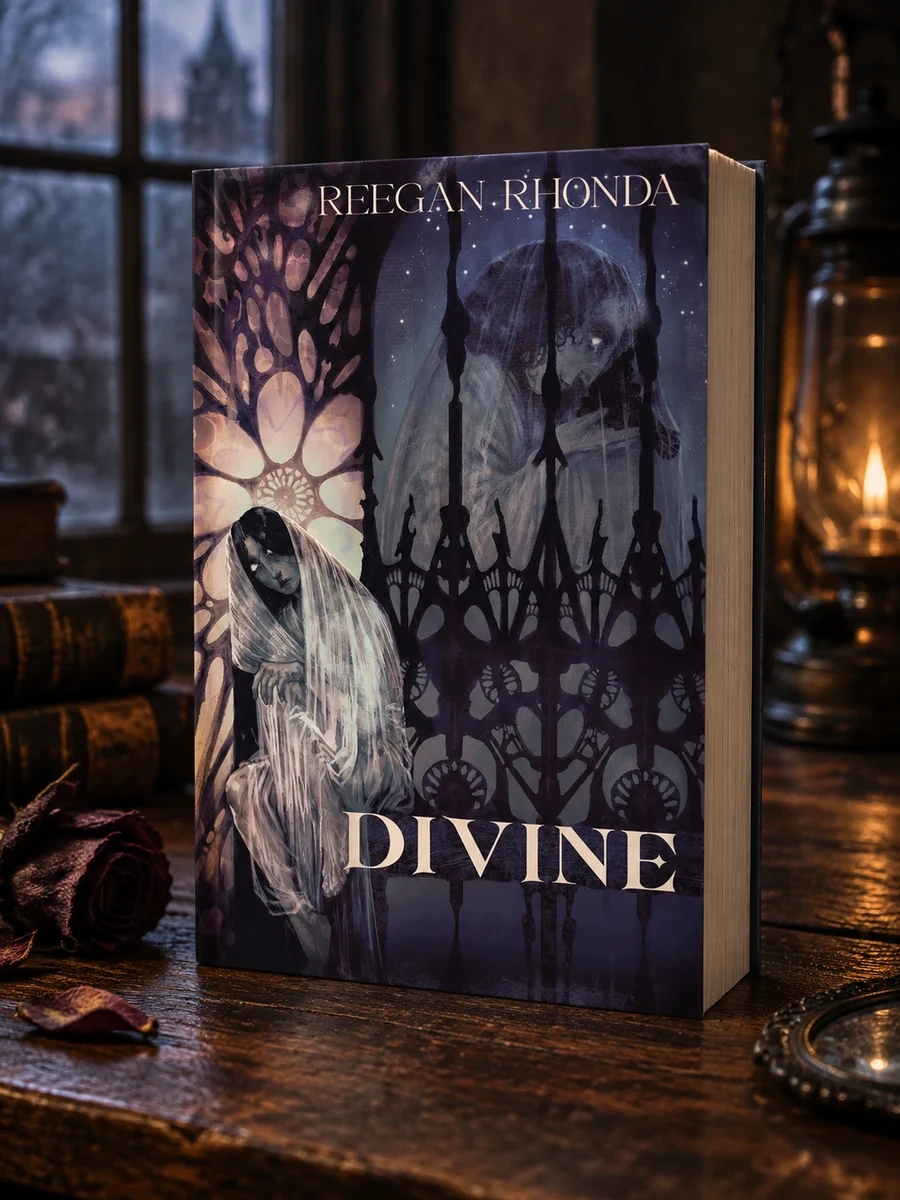
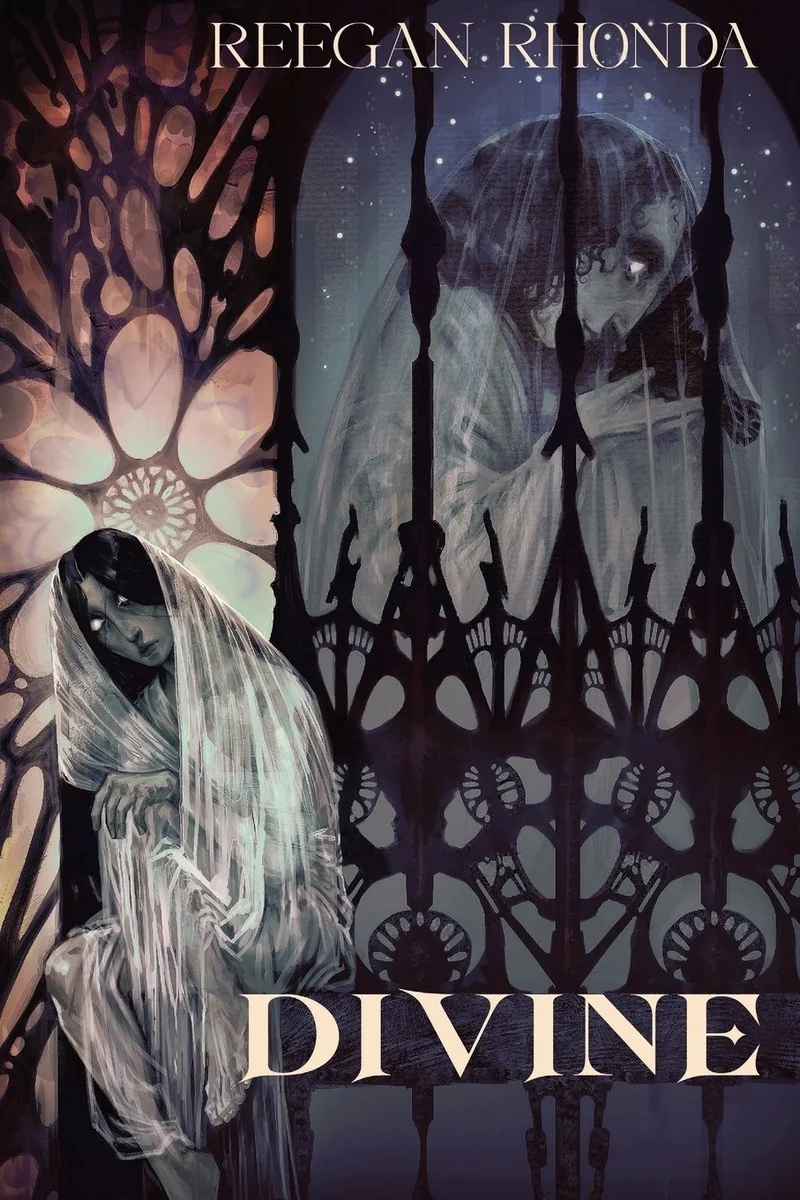
Divine
A fallen angel navigates a mysterious cathedral while bound by a whispering phonograph's commands.
This novel examines the psychological decay of Jophiel after she leaves her post as a sculptor for a dispassionate Goddess. Gabriel convinces her to fall, resulting in both becoming confined to an erected Cathedral with a whispering phonograph. The device speaks of an earth populated solely by angels and appoints them to deliver alluring sermons. Jophiel struggles with the burden of her new human vessel while the phonograph's words grow uncertain. Gabriel insists on staying and clearing the path, even as more angels arrive to upend their situation. The narrative focuses on the friction between divine origins and mortal constraints. Rhonda uses this premise to question the nature of obedience and identity. The story does not offer easy resolutions but rather a lingering sense of unease regarding the cost of freedom.
Reegan Rhonda published Divine in 2026 through her own imprint. The work draws on gothic fiction traditions and supernatural horror tropes, focusing on angelic mythology rather than historical periods or specific cultural movements.


📝 Description: Divine
💎 Our verdict on Divine
📖 Why choose it
Why this book is worth reading
Readers seeking a slow-burn psychological descent will find this book compelling. It appeals to those who enjoy deconstructing religious tropes and exploring the friction between divine origins and mortal constraints. The narrative offers a lingering sense of unease rather than easy resolutions, making it ideal for enthusiasts of gothic atmosphere and theological ambiguity. Those interested in the physical toll of mortality on supernatural beings will appreciate the detailed examination of Jophiel’s struggle. It is not for those preferring fast-paced action or traditional affirmations, but rather for readers who value atmospheric tension and complex character psychology over plot-driven excitement.
⭐ Reader reviews
Reader rating
Rhonda constructs a potent gothic atmosphere where supernatural entities confront human limitations. The premise of a fallen angel navigating a mysterious cathedral bound by a whispering phonograph creates immediate intrigue. The text excels in exploring themes of divine abandonment and the burden of identity, using Jophiel’s decay to question obedience. The tone is appropriately unsettling, focusing on psychological horror rather than gore. While it lacks traditional religious affirmations, it offers a rich meditation on freedom and its costs. This work suits readers who appreciate atmospheric depth and complex theological questions over conventional narrative arcs.
You might also like
See more →



Have a question about this item?
Ask about the edition, condition, delivery or anything else — we reply by email or phone, usually within a day.
