Crowhill
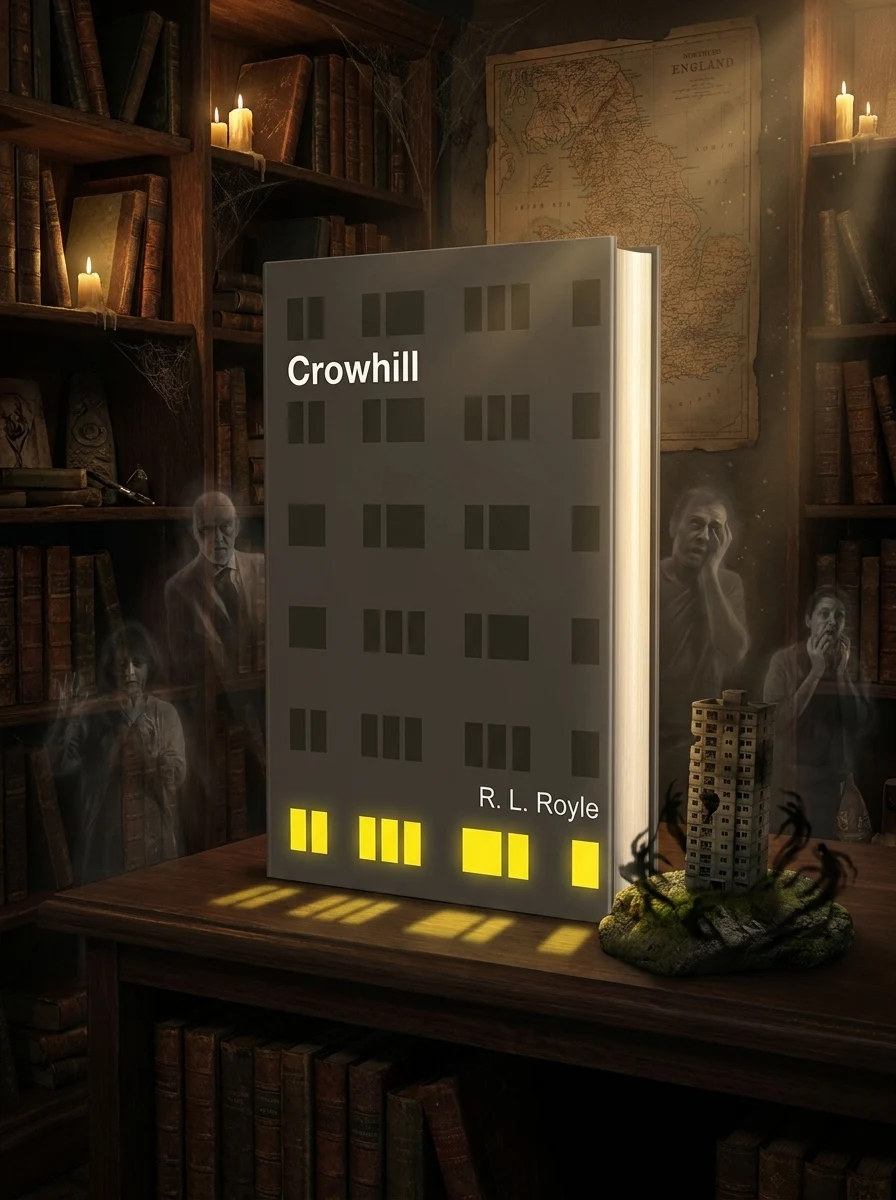
A sentient tower block warns dying tenants of collapse through lost supernatural signals.
The narrative focuses on a collapsing housing project in northern England where the building itself is aware of its fate. Eight residents and their housing officer must interpret conflicting signs from both benevolent and malevolent forces. The story highlights how isolation prevents effective cooperation during a crisis. Royle uses the setting to explore themes of control and the breakdown of community bonds. The plot does not rely on traditional monster attacks but rather on the psychological weight of impending doom and miscommunication among neighbors who cannot agree on reality.
This work sits within the tradition of British gothic fiction, specifically focusing on northern English housing estates. It reflects contemporary anxieties about urban decay and social fragmentation. The story is set in a remote community where traditional support structures have failed, leaving residents to face their fate alone.


📝 Description: Crowhill
💎 Our verdict on Crowhill
📖 Why choose it
Why this book is worth reading
Readers who prefer psychological depth over visceral gore will find this book rewarding. It appeals to those interested in the failure of communication and the erosion of community bonds under pressure. Fans of ensemble casts dealing with conflicting realities and ambiguous endings will appreciate the nuanced exploration of control. Those drawn to gothic traditions that personify architecture as a source of dread will find the setting compelling. It is ideal for audiences who enjoy atmospheric supernatural fiction that prioritizes character dynamics and emotional weight over simple horror tropes or clear resolutions.
⭐ Reader reviews
Reader rating
Royle crafts a tense ensemble piece where the tower block itself serves as both victim and warning system. The narrative effectively uses shifting perspectives to highlight how isolation prevents cooperation, creating a palpable sense of dread without relying on monster attacks. The focus on psychological erosion and miscommunication among tenants provides a fresh take on the haunted house trope. While the ambiguous ending may frustrate those seeking closure, it reinforces the theme of permanent solitude. This book suits readers who value atmospheric tension and complex character dynamics over fast-paced action or definitive answers.
📖 Read on the blog
🏛 Books from this publisher Independently Published








You might also like
See more →
Have a question about this item?
Ask about the edition, condition, delivery or anything else — we reply by email or phone, usually within a day.
