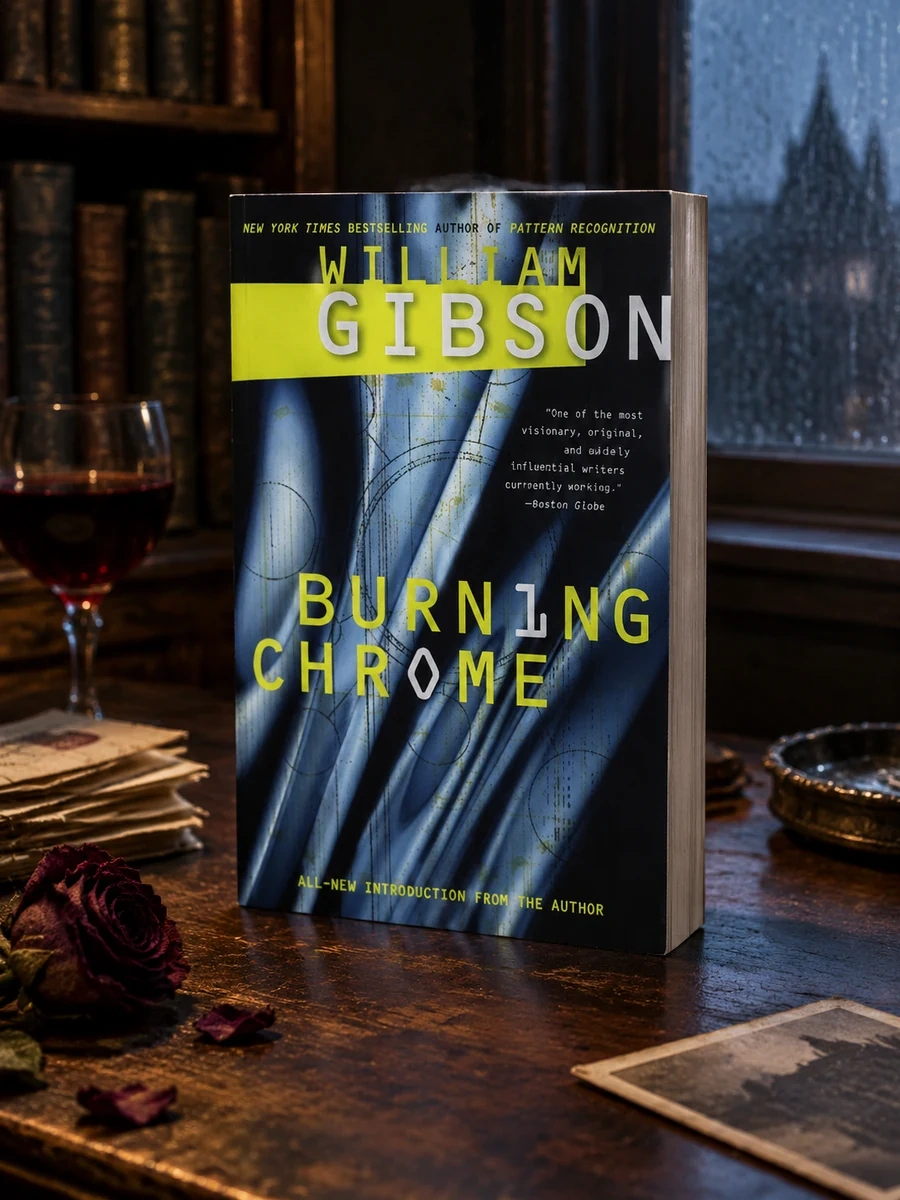

Burning Chrome
A collection of ten early short stories by William Gibson exploring technology and society.
This volume serves as a crucial archive for understanding the development of modern speculative fiction. By compiling works from the late 1970s and early 1980s, it reveals the raw ideas that would later define the cyberpunk genre. The inclusion of collaborative stories highlights Gibson’s engagement with peers like John Shirley and Michael Swanwick. These texts show a writer experimenting with narrative structures and thematic concerns before achieving mainstream success. The collection does not offer polished final drafts but rather the initial sparks of innovation. Readers interested in literary history will appreciate seeing how concepts evolved over time.
Published by Harper Voyager in 2003, this trade paperback edition collects Gibson's early short fiction from the late seventies and early eighties. It provides context for the emergence of cyberpunk literature during a period of rapid technological change.


📝 Description: Burning Chrome
💎 Our verdict on Burning Chrome
📖 Why choose it
Why this book is worth reading
This volume is essential for those interested in the literary history of speculative fiction and the evolution of modern dystopian narratives. Readers gain access to the formative years of William Gibson, observing how initial ideas regarding technology and society matured into the cyberpunk genre. It appeals to fans who appreciate seeing the collaborative roots of influential works through partnerships with peers like John Shirley and Bruce Sterling. Those seeking the origins of Gibson’s unique style will find value in these unpolished drafts. However, it may disappoint those preferring traditional horror or long-form novels, as the focus remains strictly on technological speculation and near-future consequences rather than supernatural elements.
⭐ Reader reviews
Reader rating
William Gibson’s Burning Chrome serves as a vital archive for understanding the development of modern speculative fiction. By compiling early works from the late seventies and early eighties, it reveals the raw ideas that would later define cyberpunk. The collection highlights Gibson’s experimentation with narrative structures and thematic concerns before his mainstream success. Collaborative pieces demonstrate his engagement with peers, offering a unique glimpse into the genre's origins. While not polished final drafts, these texts provide initial sparks of innovation. It suits fans of early cyberpunk and literary history enthusiasts. Readers seeking traditional horror narratives may find the technological focus limiting, but those interested in the intersection of art, commerce, and technology will appreciate this foundational work.
📖 Read on the blog
🏛 Books from this publisher Harper Voyager




You might also like
See more →



Have a question about this item?
Ask about the edition, condition, delivery or anything else — we reply by email or phone, usually within a day.
