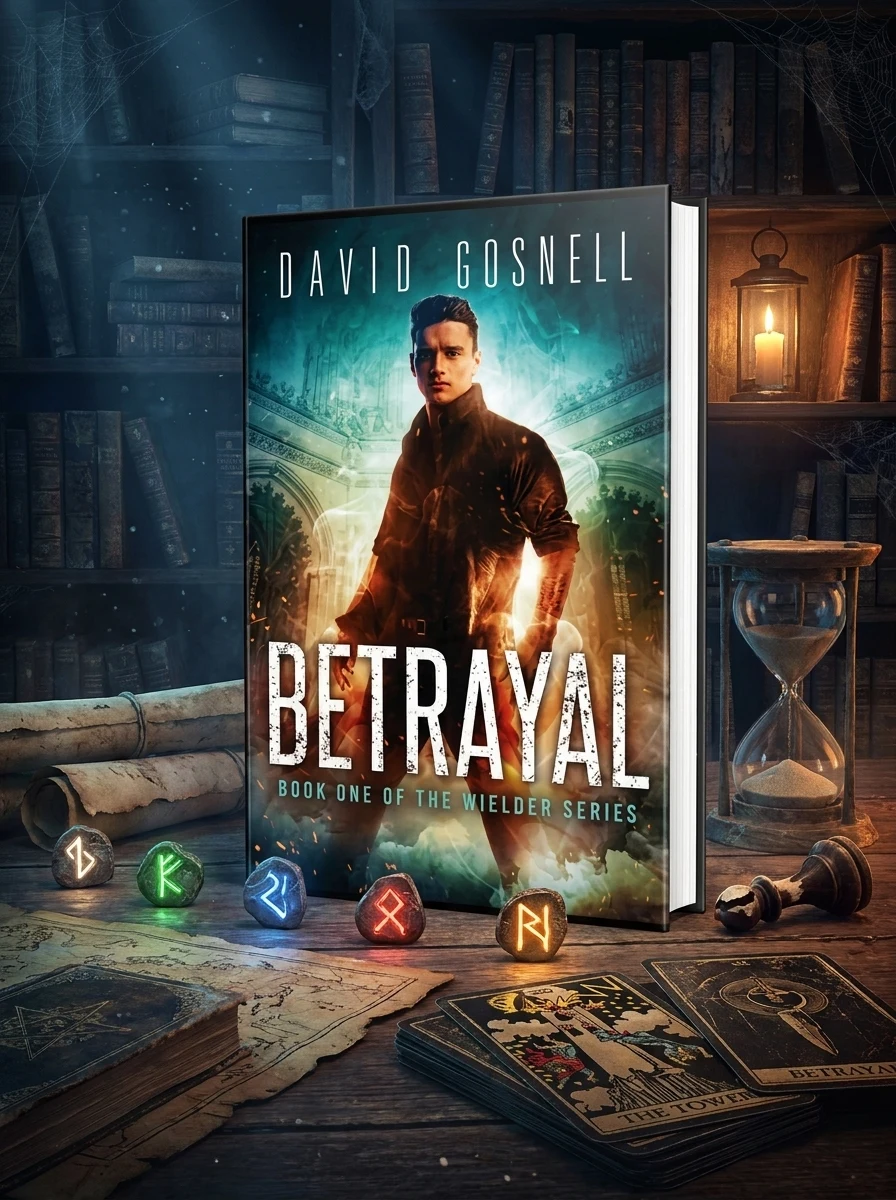

Betrayal: Book One Of The Wielder Series (Third with Prologue)
A man with immortality discovers he is a pawn in a supernatural betrayal.
Gosnell writes about Arthur MacInerny, whose life is altered by six summoned entities that grant him eternal youth and health. The narrative focuses on the isolation this creates, as Arthur must repeatedly bury people he loves. The plot accelerates when violence forces Arthur and his gang to act against their enemies. Instead of achieving victory, Arthur realizes he has been used as a tool in a larger scheme. The story examines how power can isolate individuals and make them vulnerable to manipulation. Gosnell structures the narrative to highlight the shift from confidence to despair as Arthur understands the extent of his deception.
This 2018 work sits within the modern horror genre, specifically blending gothic fiction with supernatural elements. It reflects contemporary interests in the psychological costs of eternal life and the fragility of trust among those who possess unnatural powers.


📝 Description: Betrayal: Book One Of The Wielder Series (Third with Prologue)
💎 Our verdict on Betrayal: Book One Of The Wielder Series (Third with Prologue)
📖 Why choose it
Why this book is worth reading
Readers seeking character-driven horror will find this novel compelling due to its focus on emotional depth rather than mere spectacle. Those interested in the psychological weight of eternal life, specifically the isolation of outliving loved ones, will appreciate the nuanced exploration of Arthur MacInerny’s despair. The book is ideal for audiences who enjoy narratives where betrayal and manipulation serve as the primary antagonists. It offers a reflective look at how power can isolate individuals, making it suitable for fans of gothic tales that prioritize internal struggle and the tragic consequences of supernatural bargains over fast-paced action.
⭐ Reader reviews
Reader rating
Gosnell effectively utilizes the gothic framework to examine the despair of immortality through Arthur MacInerny’s eyes. The narrative succeeds in shifting from confidence to profound isolation, highlighting the emotional cost of defying natural cycles. By focusing on the psychological burden rather than magical mechanics, the story resonates with readers who value character development. It suits those who enjoy supernatural horror where betrayal drives the plot. While not for those seeking pure action, it offers a rich exploration of vulnerability and deception. The tone remains consistently dark and reflective, ensuring the horror stems from circumstance and loss.