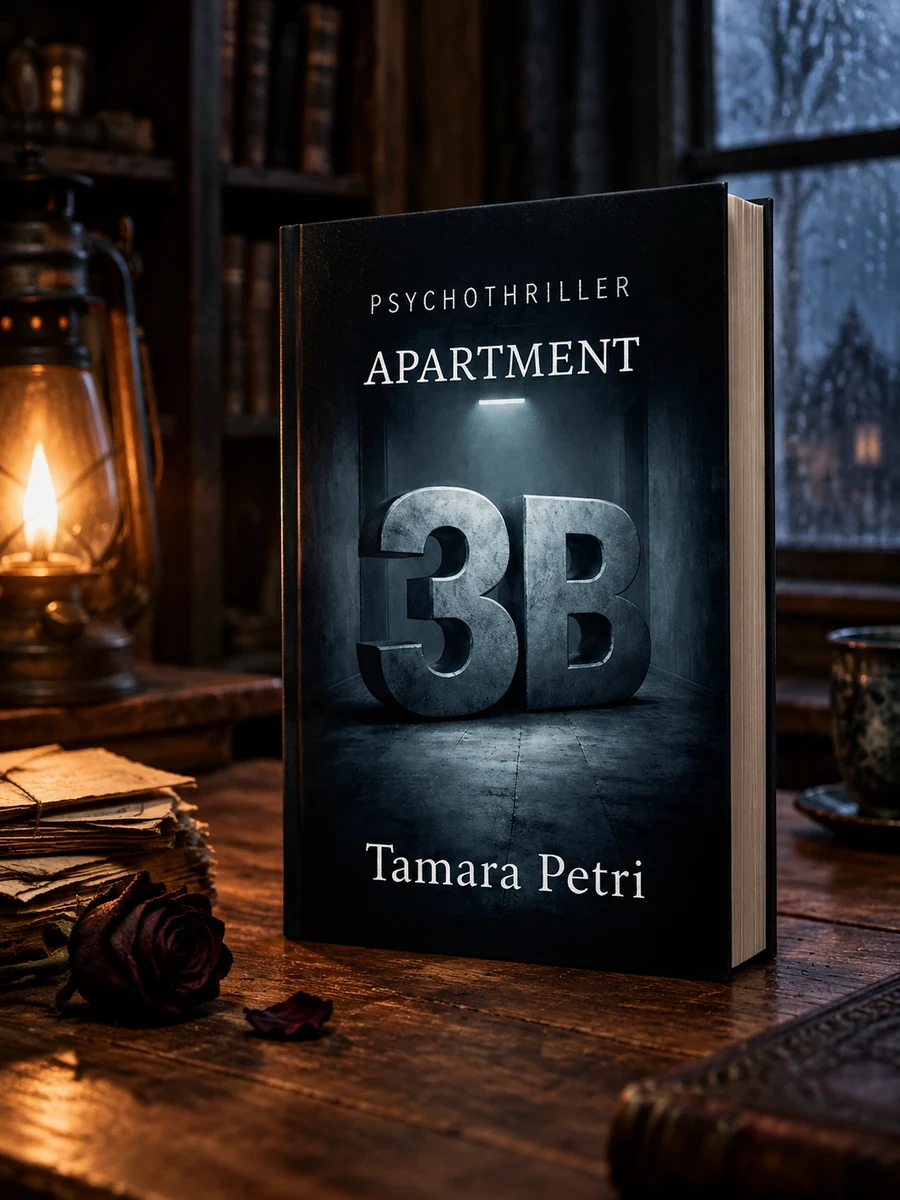

Apartment 3B
A psychological thriller about a man in a haunted apartment that remembers.
Gold’s novel explores the tension between institutional stability and domestic isolation. Johannes leaves a decade-long stay in care for a new life that quickly becomes oppressive. The apartment acts as an entity that observes and remembers rather than merely housing him. This setup challenges the reader to consider if the haunting is external or a projection of internal fear. The narrative relies on atmospheric dread and the gradual erosion of trust in one’s own perception.
This work sits within the American horror tradition, specifically the subgenre of psychological supernatural fiction. It draws on gothic themes of isolation and haunted domestic spaces. The publisher Tamara Petri released this text in June two thousand twenty-six for the US market.


📝 Description: Apartment 3B
💎 Our verdict on Apartment 3B
📖 Why choose it
Why this book is worth reading
This title is essential for readers who appreciate the slow, suffocating unraveling of sanity found in psychological horror. It appeals to those interested in the nuanced boundary between mental illness and supernatural influence, offering a study in institutional trauma and domestic isolation. The book suits individuals who enjoy atmospheric dread and the erosion of trust in one’s own perception. It is ideal for fans of narratives where the setting itself acts as an active, remembering entity rather than a passive backdrop. Those seeking lighthearted escapism will find it unsatisfying; however, readers craving intellectual engagement with the intersection of trauma and the uncanny will find profound value in its precise, unsettling examination of the mind.
⭐ Reader reviews
Reader rating
Angel Gold delivers a masterclass in atmospheric tension, focusing on the psychological unraveling of Johannes rather than relying on clichéd ghostly tropes. The narrative effectively challenges the reader to question whether the haunting is external or a projection of internal fear, creating a pervasive sense of unease. By portraying the apartment as an entity that observes and remembers, Gold elevates the domestic space into a character of its own. This approach suits fans of gothic fiction and psychological thrillers who enjoy exploring complex themes of trauma. The precision of the prose and the gradual erosion of trust in perception make this a compelling, if unsettling, read for those who prefer intellectual horror over visceral jumpscares.
You might also like
See more →






Have a question about this item?
Ask about the edition, condition, delivery or anything else — we reply by email or phone, usually within a day.
