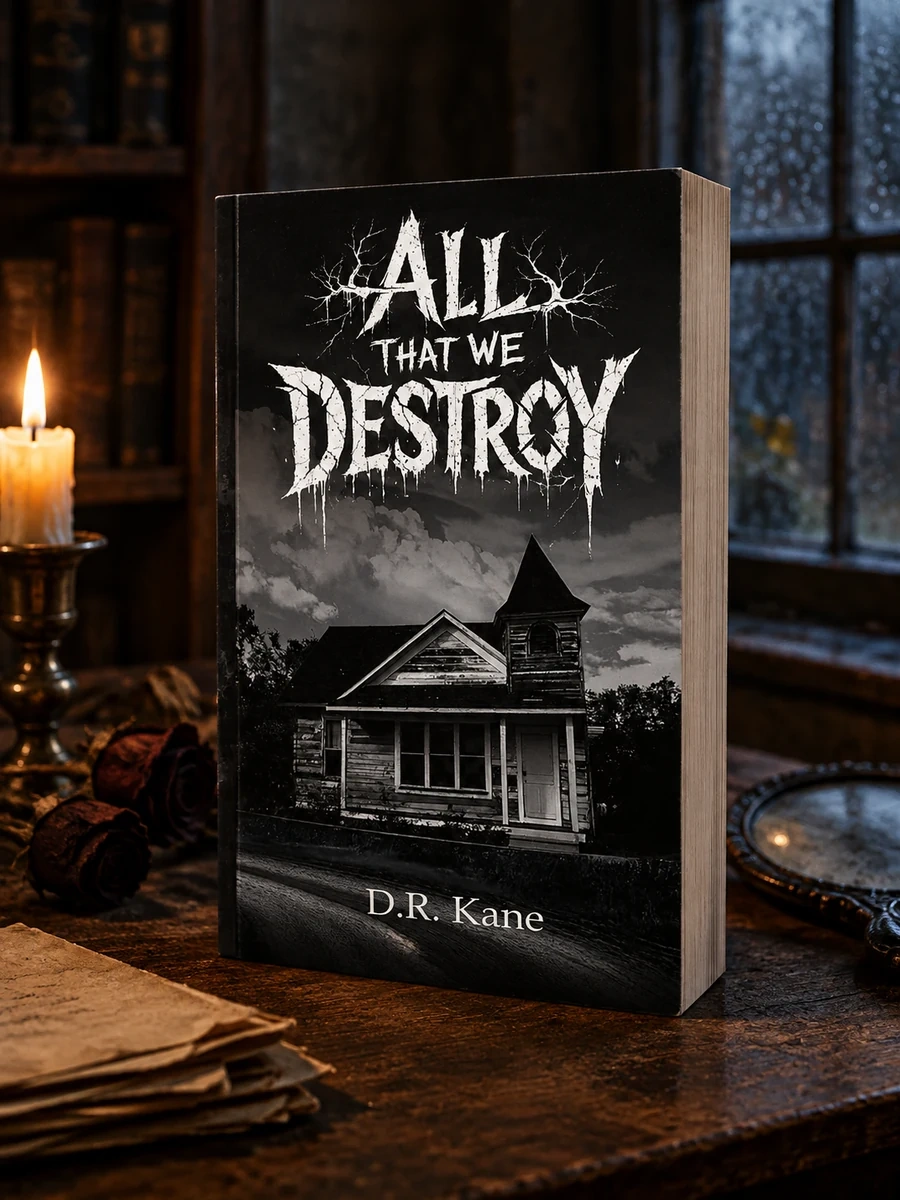
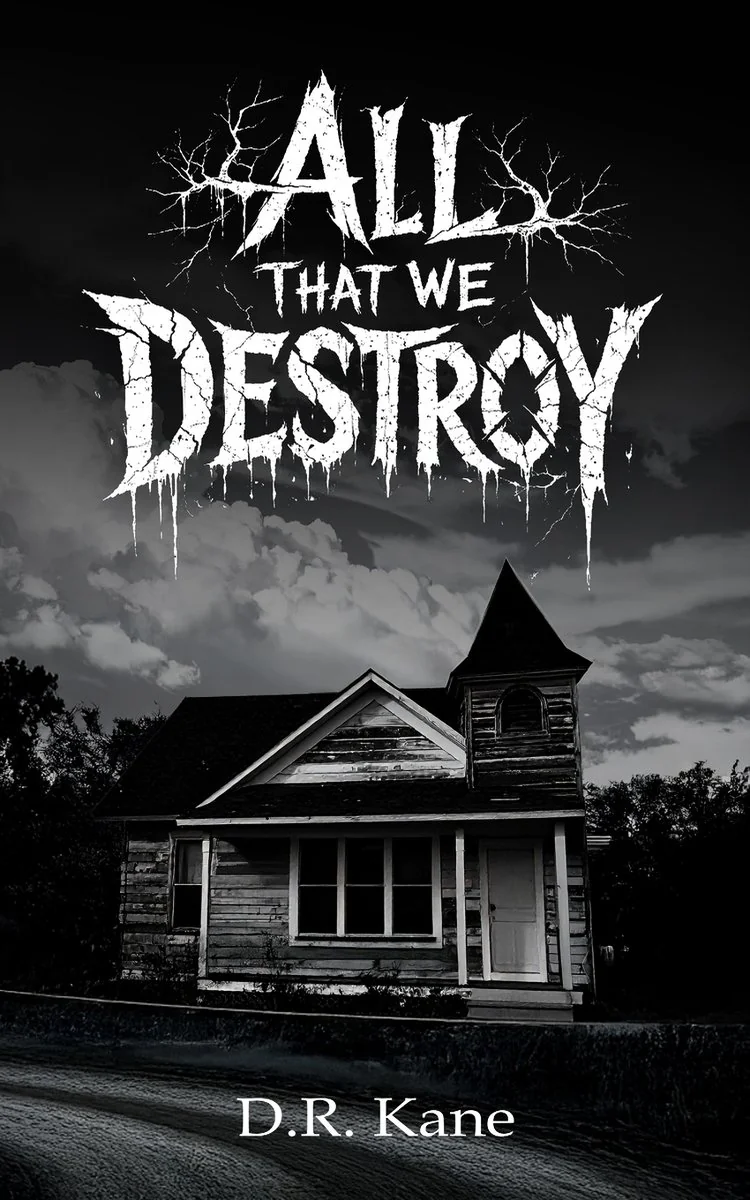
All That We Destroy: A Paranormal Horror
A man buys an isolated Florida home only to find the land itself is hunting him.
Art Wagner leaves behind a rotting city and a broken marriage for eight acres of rural Florida. He expects silence, but the woods move closer each night. The house listens. Stains appear on walls that resist cleaning. Shadows shift in ways that suggest presence rather than absence. Kane writes with a focus on sensory details: the weight of the air, the sound of unseen footsteps, the feeling of eyes upon him. The plot does not rely on jump scares but on the gradual realization that the property is alive and hostile. Art’s attempts to rationalize his fear fail as the boundary between his mind and the land dissolves. The narrative arc moves from skepticism to inescapable dread, culminating in a confrontation with something ancient that has waited for him.
The novel is set in rural Florida, drawing on the American gothic tradition of isolated homes and haunted landscapes. It reflects contemporary anxieties about urban decay and the search for escape in forgotten places, published independently in 2026.


📝 Description: All That We Destroy: A Paranormal Horror
💎 Our verdict on All That We Destroy: A Paranormal Horror
📖 Why choose it
Why this book is worth reading
Readers who prefer atmospheric dread over jump scares will find this book rewarding. It appeals to those interested in slow-burn psychological horror rooted in domestic settings. The narrative offers a unique twist on the haunted house trope by making the land itself the antagonist. Fans of gothic isolation and uncanny valley sensations will appreciate the sensory focus. It is ideal for those who enjoy stories where rationality fails against ancient, hostile forces. The book suits readers who like grounded, realistic landscapes turning sinister.
⭐ Reader reviews
Reader rating
D R Kane delivers a compelling study in psychological erosion, transforming a rural Florida home into a site of inescapable dread. The prose effectively utilizes sensory details—the weight of air, unseen footsteps—to build tension without relying on cheap shocks. By positioning the land as an active, patient antagonist, the narrative subverts traditional haunted house tropes with disturbing originality. The slow progression from skepticism to terror is well-executed, offering a deeply unsettling experience for those who appreciate atmospheric storytelling. However, readers seeking fast-paced action or clear supernatural resolutions may find the pacing and ambiguity frustrating. This work stands as a strong entry in modern gothic horror for those willing to endure its gradual, oppressive build-up.
📖 Read on the blog
🏛 Books from this publisher Independently Published








You might also like
See more →

Have a question about this item?
Ask about the edition, condition, delivery or anything else — we reply by email or phone, usually within a day.
