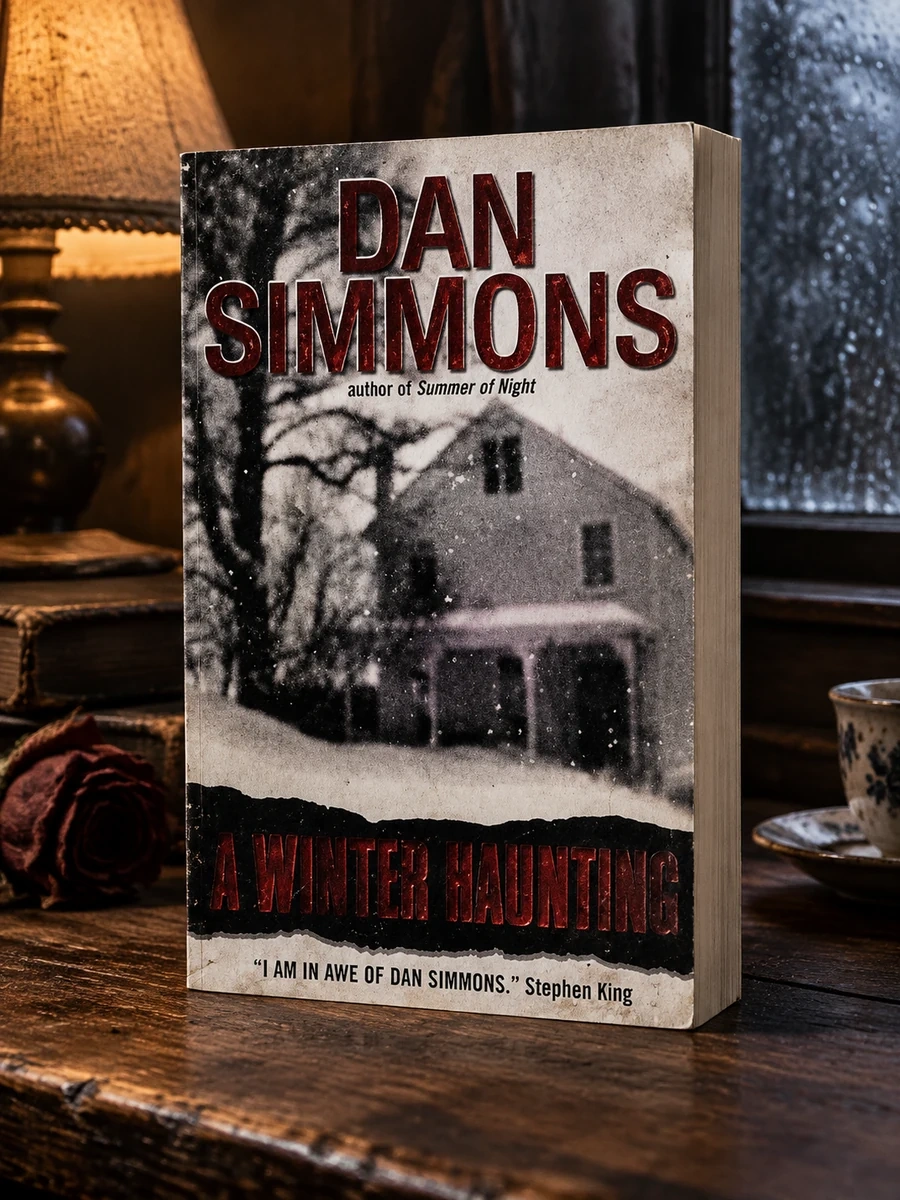

A Winter Haunting
Dale Stewart returns to Elm Haven and faces private demons in this horror sequel.
This novel continues the saga begun in Summer of Night by focusing on Dale Stewart. He has sabotaged his personal life and returns to Elm Haven. He occupies the residence of a friend who died in an accident in 1960. The story does not rely on generic monsters but on internal psychological decay. Dale’s reality shifts as private demons twist his perception. This approach creates a slow-burning dread rather than sudden shocks. The narrative structure emphasizes isolation and the inescapable nature of past mistakes. Readers will find the horror stems from Dale’s own actions and their consequences. The setting of Elm Haven provides a familiar yet unsettling landscape for these events.
Published by HarperTorch in 2002, this book sits within the tradition of American horror fiction. It connects to the supernatural genre through its use of haunted locations and psychological terror. The work appeals to fans of gothic literature who enjoy complex character studies intertwined with eerie settings.


📝 Description: A Winter Haunting
💎 Our verdict on A Winter Haunting
📖 Why choose it
Why this book is worth reading
Readers who appreciate slow-burning dread over sudden shocks will find this book compelling. It suits those interested in how past mistakes and childhood trauma resurface to haunt adult lives. Fans of psychological horror rooted in personal failure and guilt will engage with Dale Stewart’s descent into isolation. The narrative rewards patience, offering a study of private demons rather than generic monsters. Those who enjoy gothic atmospheres where the house itself acts as a character will find the familiar yet unsettling landscape of Elm Haven deeply immersive. It is ideal for readers seeking a continuation of a saga that emphasizes the inescapable nature of history over fast-paced action or clear resolutions.
⭐ Reader reviews
Reader rating
Simmons crafts a tense exploration of psychological decay, using the familiar geography of Elm Haven to ground supernatural elements in tangible dread. The narrative structure effectively emphasizes isolation, making Dale Stewart’s internal struggle palpable and terrifying. By focusing on private demons that twist reality, the book avoids generic horror tropes in favor of deeper thematic resonance. This approach creates a lingering sense of unease rather than relying on jarring shocks. The work succeeds in examining how childhood events impact adult lives, offering a nuanced view of guilt and consequence. It is best suited for readers who value atmospheric depth and character-driven terror over plot-heavy action.
📖 Read on the blog
✍️ More books by this author Dan Simmons





🏛 Books from this publisher HarperTorch
You might also like
See more →



Have a question about this item?
Ask about the edition, condition, delivery or anything else — we reply by email or phone, usually within a day.
