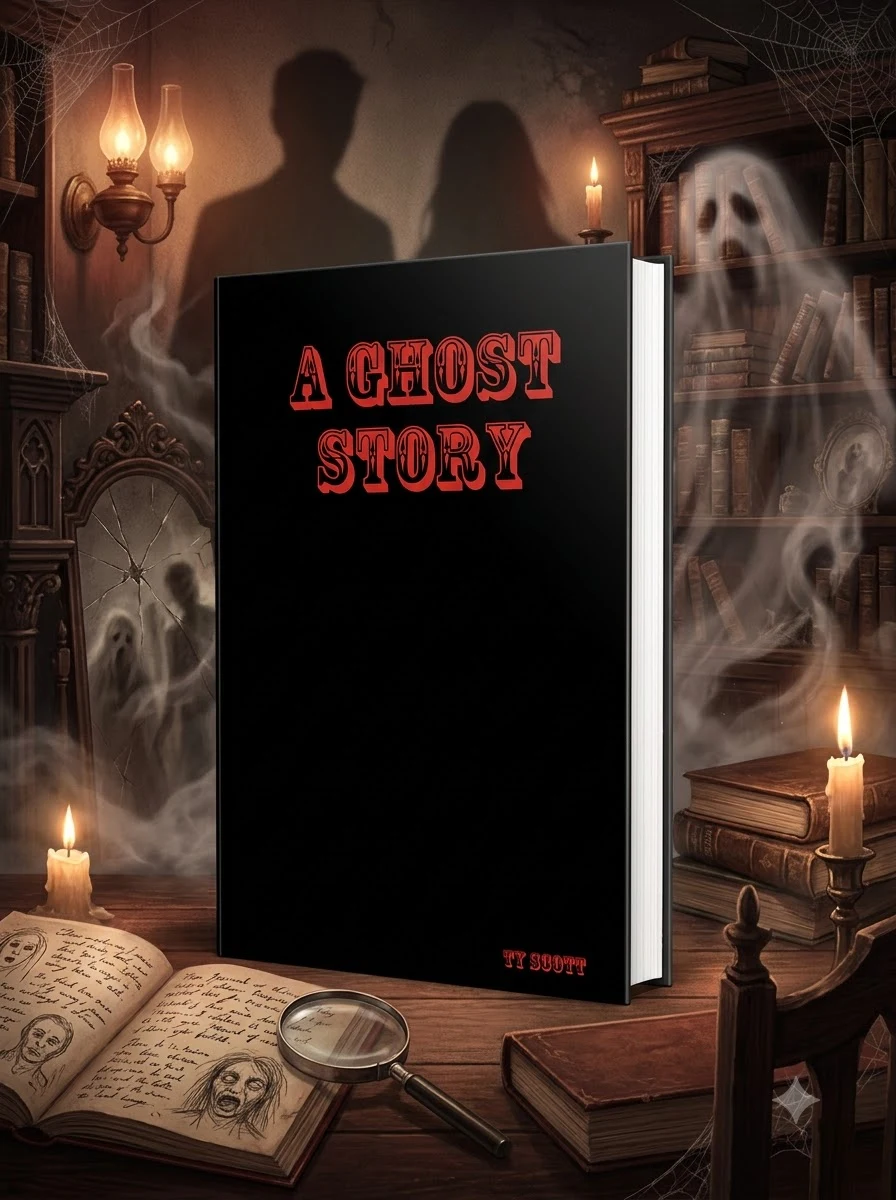
A Ghost Story
A dual-perspective inquiry into madness and belief in ghosts.
This volume presents a study of mental unraveling through two distinct viewpoints. The author, Ty Scott, guides the reader toward an internal examination of supernatural beliefs. The text functions as a mirror for the reader’s own convictions rather than a traditional tale. It avoids providing answers, instead placing the burden of interpretation on the audience. The publisher, Timothy W Hogan, released this work to challenge standard genre expectations. Readers must look within themselves to determine if they believe in ghosts. The narrative structure supports this goal by focusing on the psychological state of the characters. It does not rely on plot twists or external threats. The experience is defined by the quiet tension between doubt and acceptance.
Published in 2008, this work sits within the tradition of psychological horror that questions reality. It draws on the genre’s long history of exploring the boundary between sanity and delusion. The text reflects a period where supernatural fiction often shifted toward internal psychological states rather than external monsters.


📝 Description: A Ghost Story
💎 Our verdict on A Ghost Story
📖 Why choose it
Why this book is worth reading
Readers who crave introspective horror over jump scares will find this volume compelling. It suits those willing to engage with psychological unease and philosophical ambiguity, offering a unique mirror for examining personal convictions about the supernatural. The book demands active participation, forcing the audience to determine the existence of ghosts through self-reflection rather than receiving answers from the text. It is ideal for individuals comfortable with quiet tension and doubt, providing a stark inquiry into belief systems that prioritizes personal judgment over traditional narrative satisfaction.
⭐ Reader reviews
Reader rating
Ty Scott’s A Ghost Story excels in its bold rejection of conventional horror tropes, focusing instead on the delicate interplay between madness and belief. The dual-perspective structure effectively guides the reader toward an internal examination of fear without relying on plot twists or external threats. By placing the burden of interpretation entirely on the audience, Scott creates a distinct reading experience that lingers long after the final page. This work is best suited for readers who appreciate psychological depth and are willing to confront their own perceptions of the supernatural. It stands as a challenging but rewarding inquiry into the nature of reality and delusion.
You might also like
See more →






Have a question about this item?
Ask about the edition, condition, delivery or anything else — we reply by email or phone, usually within a day.
