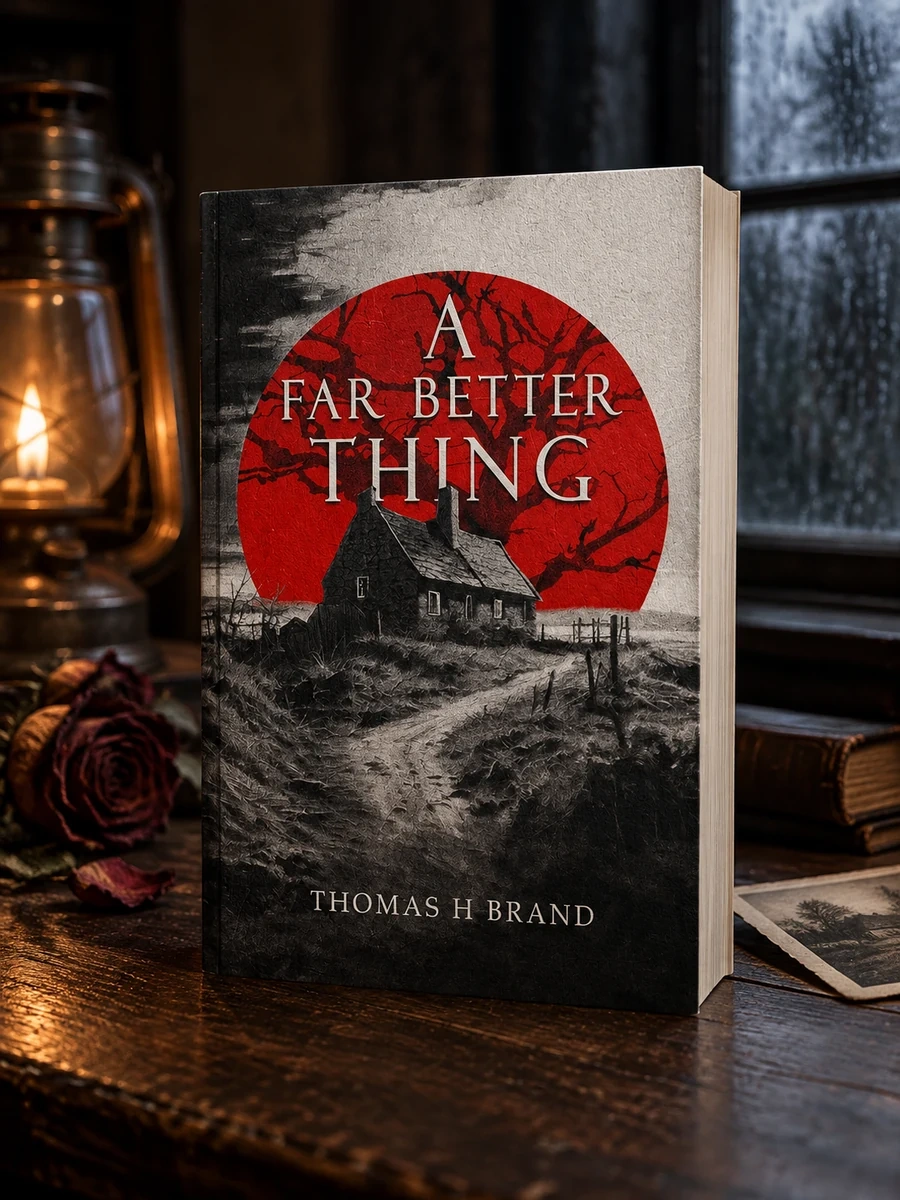
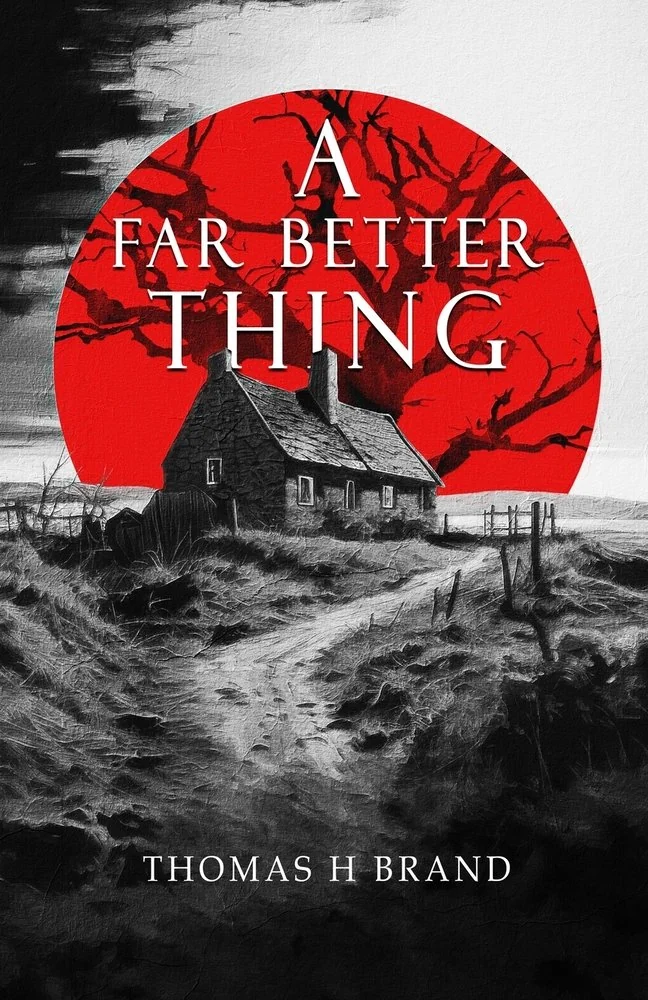
A Far Better Thing
A historical horror novel about a secret society binding the Devil through sacrifice.
The plot centers on Elizabeth Burford, a member of the Circle who believes sacrificing innocents keeps Hell contained. In 1630, she participates in an execution that haunts her for decades. By 1950, she is pursued by a deceased brother figure, suggesting supernatural elements beyond simple guilt. The narrative investigates whether the Circle’s foundational belief is true or a lie. When a member turns against the group, Elizabeth must evaluate the truth of their mission. This perspective forces a reckoning with her own complicity in evil acts performed for a greater good. The story examines the isolation of those who believe they alone understand necessary horrors. It challenges the reader to consider the cost of safety and the nature of eternal damnation.
The narrative spans from 1630 to 1950, examining historical periods where religious fervor and secret societies influenced societal norms. It draws on gothic traditions of haunted pasts and the supernatural struggle between good and evil within human institutions.


📝 Description: A Far Better Thing
💎 Our verdict on A Far Better Thing
📖 Why choose it
Why this book is worth reading
Readers who appreciate the isolation of protagonists burdened by necessary evils will find resonance here. The book appeals to those interested in the psychological toll of maintaining a lie for the greater good. It offers a deep dive into the nature of eternal damnation and the cost of safety. Those who enjoy complex moral ambiguity rather than clear resolutions will value this exploration of complicity. The narrative challenges assumptions about faith and morality without offering easy answers. It is ideal for readers seeking a heavy, atmospheric examination of how individuals justify horrific acts to protect humanity.
⭐ Reader reviews
Reader rating
Brand delivers a compelling inquiry into the Circle’s foundational belief, questioning whether their sacrifices are true or a lie. The shift from 1630 to 1950 highlights the enduring impact of sacrificial violence on the human psyche. Elizabeth Burford’s journey forces a reckoning with her complicity in evil acts performed for a perceived greater good. The text excels at examining the isolation of those who believe they alone understand necessary horrors. It suits readers of gothic fiction and psychological horror who enjoy complex ethical dilemmas. However, it may not suit those seeking lighthearted tales or clear moral resolutions. The narrative structure effectively contrasts ritual necessity against method horror.
✍️ More books by this author Thomas H Brand


🏛 Books from this publisher Thomas H. Brand
You might also like
See more →

Have a question about this item?
Ask about the edition, condition, delivery or anything else — we reply by email or phone, usually within a day.
